Gumroad's discovery surface barely sells products on its own. The marketplace tab exists, but the algorithm prioritizes products with existing sales velocity, which creates a chicken-and-egg problem for new listings. Most Gumroad creators figure this out after a quiet month with single-digit sales, attribute it to the product, and either stop creating or pivot platforms. The product was rarely the problem. The distribution was.
The distribution playbook for Gumroad is narrower than most courses suggest, but the channels that work, work well.
Why Gumroad alone isn't enough
Gumroad gives creators three discovery surfaces. The marketplace feed (low traffic for new products). The creator's storefront URL (effectively a destination, not a source). Email broadcasts to existing followers (only useful once a list exists).
None of these source new traffic at meaningful volume. Every dollar of Gumroad revenue for an indie creator typically comes from off-platform traffic that landed on the product page through someone else's link. The marketing problem is producing that link.
The five channels that drive Gumroad sales
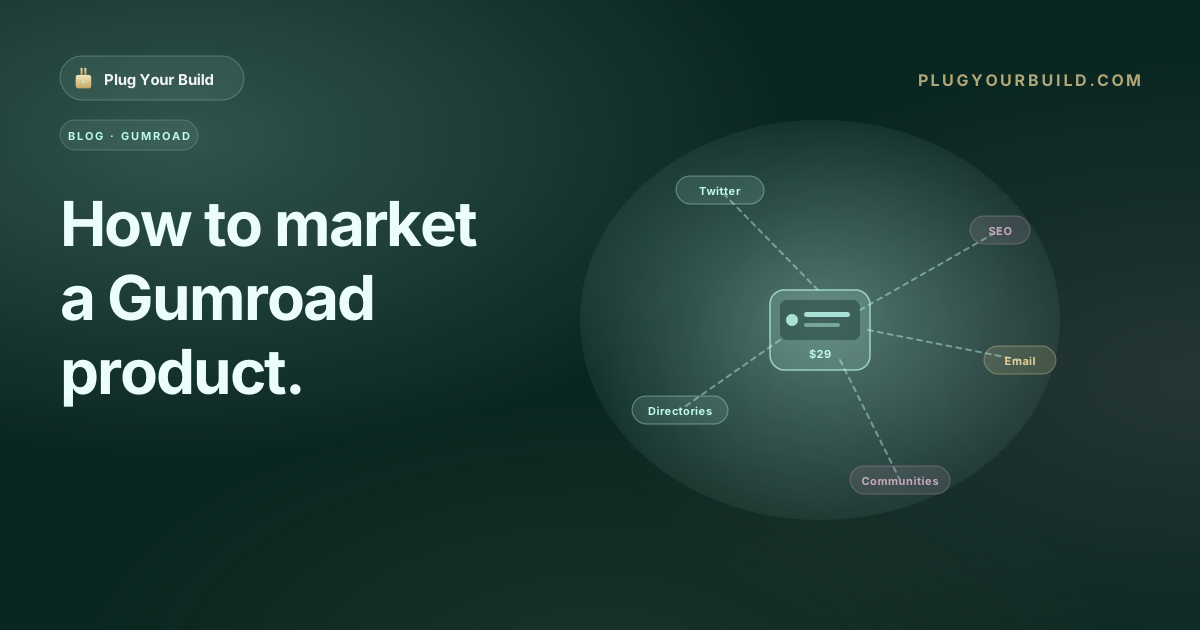
Five channels reliably produce traffic and conversions for digital products. Most successful Gumroad creators run three to four of them.
Twitter (or X). For digital products, Twitter remains the highest-density audience of buyers for templates, design assets, courses, and tools. The format that works: posts that demonstrate the value of the product (a tip from the course, a screenshot of the template in use, a result the product produced) with a link to the Gumroad page. Conversion from a substantive thread to a Gumroad sale is typically 0.3 to 1.5 percent of impressions, which is roughly 30 to 150 sales per 10,000 thread impressions for a $20 to $50 product.
SEO via cross-publishing. Gumroad product pages don't rank well on their own. Creators who publish related content on their own blog or on Google-indexable destinations rank for category queries and drive consistent organic traffic to the Gumroad listing. A "best Notion templates for freelancers" blog post that ranks on page one of Google sends 50 to 200 qualified visitors per month for years.
Email list. The single highest-converting channel for digital products, by a wide margin. List of 1,000 engaged subscribers in the right niche typically produces 20 to 80 sales on a product launch, depending on category and price. Building the list happens through the other channels; selling to the list converts at 2 to 8 percent on launch announcements.
Cross-platform community posts. Niche subreddits, Indie Hackers, relevant Discord communities, Facebook groups. The work: read the community rules carefully, identify what kind of post format works (it's almost never a launch announcement), and post something useful that demonstrates the product's value without being a sales pitch. A single well-received community post can produce 20 to 100 sales for a fitting product.
Directory listings. Plug Your Build for cross-category visibility (the Gumroad assets category specifically), specialist directories for the product's niche (design directories, template directories, AI tool directories), and any active "indie maker" directory that accepts digital products. Each listing produces a steady drip of qualified buyers indefinitely. Five quality listings can produce 5 to 25 sales per month combined, with no ongoing effort after submission.
The right sequence
Most creators try to launch on all five channels simultaneously, which produces mediocre results across all of them. The sequence that works:
-
Build the product and the listing. Write the Gumroad page itself: a sharp headline, clear demonstration of what's inside, real screenshots, social proof if any exists.
-
Pre-launch on Twitter. Two to three weeks before launch, post about the problem the product solves. Not "I'm building X." Posts that demonstrate the problem in concrete terms, that the product later solves. This pre-warms the audience.
-
Launch via Twitter and email simultaneously. The launch announcement on Twitter (a thread, the asset, the link), and an email to whatever list exists (even if small). These two channels do the first 80 percent of launch-day sales.
-
Two days after launch, submit to directories. Plug Your Build, the relevant specialist directories, any general indie maker directories that accept digital products. These produce ongoing trickle traffic for months after the launch.
-
Within the first two weeks, publish related blog content. A how-to using the product. A tutorial that references it. A "best of" list where the product belongs. This content compounds over months and is the highest-ROI work after the launch itself.
-
Identify two or three niche communities the audience reads. Plan a substantive community post for each, scheduled across the following two to four weeks. Not launch announcements; useful content that demonstrates the product's value indirectly.
Common failure modes
Three patterns recur in low-performing Gumroad launches.
Treating the launch as the marketing. A single launch tweet, a single email, and then radio silence. Gumroad products with this pattern produce 5 to 20 sales total and then flatten. The launch is the trigger, not the strategy.
Pricing on the floor. A $9 product sells the same volume as a $29 product in most categories, but at one-third the revenue. Underpricing also hurts perceived quality, which lowers conversion. Most indie Gumroad creators price 30 to 50 percent below their products' market rate, leaving substantial revenue uncollected.
Ignoring the product page. The Gumroad page is the conversion surface; weak copy here loses 30 to 60 percent of would-be buyers. Real screenshots, a clear headline, a specific value proposition, and a transparent feature list outperform generic "buy now" pages by wide margins.
What success looks like
A well-marketed Gumroad product in a real niche typically produces 50 to 300 sales in its first 90 days at a price between $19 and $59, generating $1k to $15k in revenue. The numbers depend more on niche and audience fit than on the marketing tactics themselves.
The work-to-revenue ratio compares favorably to most monetization paths once the launch is past. Each marketing channel keeps producing sales for months. The Gumroad page itself doesn't change. The product, once shipped, doesn't require ongoing development beyond occasional updates.
The creators who consistently sell on Gumroad are not the ones with the largest audiences. They're the ones who run two to three distribution channels deliberately and let the directory and SEO listings compound in the background.
Plug Your Build lists Gumroad assets, courses, and other digital products alongside SaaS, newsletters, and Discord servers. Standard listings start at $3.99/month and stay live indefinitely. Submit yours here.