Building in public has become one of those phrases that sounds tactical but rarely is. Most "build in public" content is either daily-MRR screenshots from accounts that already had an audience, or vague encouragement that ends with "and just be authentic." Neither version helps an indie maker who's actually trying to build an audience while shipping a product.
The version that works is narrow, practical, and not what the term suggests. Building in public isn't about transparency for its own sake. It's a specific content strategy that uses the act of shipping as the source material.
What building in public actually is
A working definition: turning real product decisions, real numbers, and real moments into content that other makers find useful enough to share.
The unit of content is the decision or the data point, not the daily update. A tweet about a hard pricing call you just made is build-in-public content. A tweet that says "shipped a small fix today" is not.
The audience for this content is other operators and prospective users in your category. Not "everyone." Not "founders in general." A maker building a CRM for freelancers is writing for freelancers and other CRM builders, not for VCs or marketers.
What's worth sharing
Five categories produce content that compounds.
Decisions with real tradeoffs. A pricing change. A platform pick. A feature you killed. The shape of useful content here: what you chose, what you almost chose, why, and what it cost. Decision content does well because it's hard to write without specifics, which means it's hard to fake.
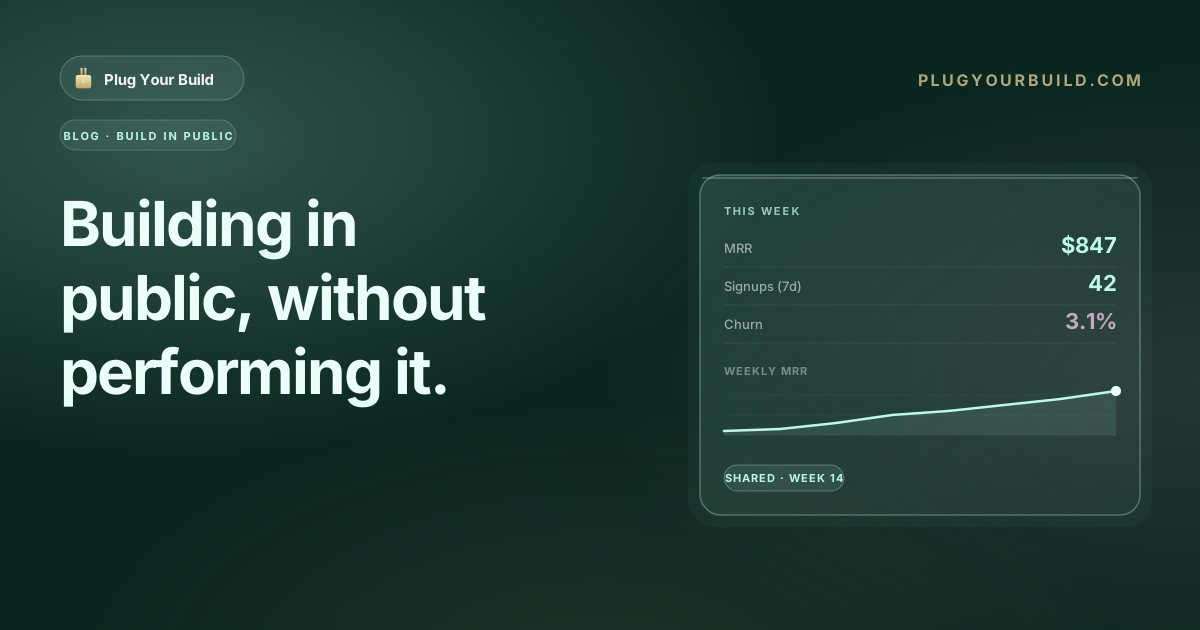
Numbers, but only the real ones. MRR, signups, conversion rates, churn, traffic sources. Two rules: don't round up, and don't share numbers you can't explain. A revenue chart with no commentary is empty. A revenue chart with one paragraph on why the curve bent in March is substantive.
Failures with the actual lesson. "I lost a customer because of X" outperforms "I'm pivoting because of vibes" by a wide margin. The failure has to be specific enough that another maker can recognize their own version of it.
Behind-the-scenes work, when it's interesting. The system you built to handle weekly digests. The customer interview process that surfaced a problem. The internal Notion doc that drives your product roadmap. Not every backstage detail is interesting; the test is whether someone else could steal the idea and use it.
Public commitments. "By June, the product will have X." Public commitments do two things: they create accountability, and they invite the audience to track your progress. Failed commitments aren't fatal as long as the explanation is honest.
What's not worth sharing
A few common categories produce noise rather than signal.
Daily check-ins with no substance. "Day 47 of building" is a habit, not content. If the day doesn't produce a specific decision, number, or lesson, skip the post.
Vague optimism. "Big things coming." "Excited about the next quarter." These produce zero engagement and dilute the times you actually have something to say.
Anything you can't follow up on. Sharing a "100k MRR by end of year" goal is fine if you'll later share the actual number. Sharing it as a manifestation post is performative and the audience knows.
Other people's data. Industry stats, viral takes, "X just announced Y." Curating other people's content trains the audience to follow you for curation, which is not the audience you want for a product.
Internal arguments. Disagreements with co-founders, employees, or partners. Even if the audience finds it interesting, the cost to relationships and trust is structurally negative.
The cadence
Two to four substantive posts per week is the sweet spot for most makers. Less than that and the audience forgets you exist between posts. More than that and the average post quality drops.
Substantive is the word doing the work. Three thoughtful posts per week beats fourteen filler posts. The audience is built by the posts that get bookmarked and shared, not the posts that scroll past.
A workable rhythm:
Monday: one decision-shaped post. What you're choosing this week and why.
Wednesday or Thursday: one numbers or lesson post. Something from the actual data of the previous week.
Friday or Saturday: one reflective or "what I'm thinking" post. Looser, more conversational.
Weekend: optional. Some weeks the third post slot is empty, and that's better than filling it with nothing.
Channels
Twitter (or X) remains the primary channel for build-in-public content as of 2026. The combination of operator density, fast feedback, and a culture that rewards specificity is unmatched elsewhere.
Indie Hackers is the secondary channel. Long-form milestone posts get surfaced and earn comments from other operators. The crowd is smaller but the quality of engagement is higher.
A personal blog or newsletter is the durable archive. The posts that compound on Twitter are gone in three days. The same content on a blog is found via search for years. Cross-publishing the most substantive Twitter content to a blog turns ephemeral content into a permanent asset.
LinkedIn works for the operator-buyer audience but the build-in-public crowd there is small. Skip it unless your product targets larger-company buyers.
The failure modes
Performative transparency. Sharing numbers that look good and burying numbers that don't. The audience notices the missing data points faster than makers expect, and once trust erodes the content stops working.
Growth-hacking the format. Engagement-bait closers ("Agree?" "Drop your thoughts"). Numbered listicles with no actual numbers. Hot takes for the sake of clicks. The build-in-public audience punishes these formats more aggressively than other audiences because the value proposition of the format is specificity.
Confusing audience with customers. A 10,000-follower Twitter account does not equal a 10,000-customer business. The audience often produces some customers, but the conversion rate from build-in-public follower to paid customer is typically 0.5 to 2 percent, not 20 to 30 percent. Plan for that ratio.
Burnout. Daily posting for a year is unsustainable for most solo operators. A sustainable cadence (two to four posts per week, varying in length and depth) outperforms an unsustainable one (daily detailed posts that go silent in month three).
The audience-to-customer conversion
The honest version of the conversion math: a build-in-public audience of 1,000 engaged followers in the right niche tends to produce somewhere between 10 and 30 paying customers within a year. The audience also tends to produce other valuable outcomes: hires, partnerships, introductions, podcast invites, the occasional press piece.
For makers who want a marketing channel that produces only paid customers, build in public underperforms paid acquisition once the funnel works. For makers who want a long-term distribution asset that compounds and produces secondary benefits, build in public outperforms almost everything.
The choice is which game you're playing. Performing transparency for clicks is the game that fails. Treating shipping as the source material for useful content is the game that works.
Plug Your Build is a permanent directory for indie makers across SaaS, newsletters, courses, Gumroad assets, Discord servers, and more. Standard listings start at $3.99/month and stay live indefinitely. Submit yours here.